
BUSINESS OF FASHION & BRANDING
BUSINESS OF FASHION & BRANDING
Fast Fashion vs Luxury Business Models
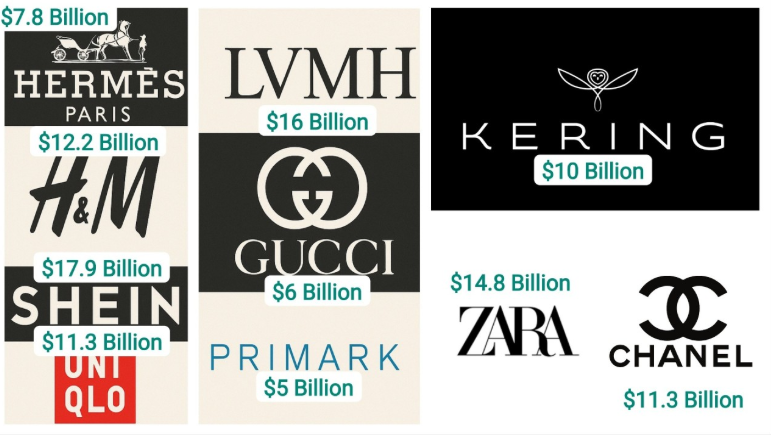
Fashion is not only about clothes. It is also a business built on branding, pricing, customer psychology, identity, and desire. Two of the most powerful models in the fashion industry are fast fashion and luxury fashion. Although both sell clothing, shoes, bags, and accessories, they work in completely different ways. Fast fashion focuses on speed, affordability, and mass consumption, while luxury fashion focuses on exclusivity, craftsmanship, heritage, and long-term prestige. Understanding these two models helps explain why a T-shirt can cost ₹799 in one store and ₹70,000 in another, even though both may look simple at first glance.
Fast fashion brands such as Zara, H&M, Shein, and Forever 21 are built around the idea of quick response. They observe runway trends, celebrity outfits, viral social media styles, and street fashion, then turn those ideas into affordable clothing within weeks or sometimes even days. Their main goal is to make trendy fashion accessible to a large number of people. A customer can walk into Zara and find clothes that resemble current luxury or designer trends at a much lower price. This gives ordinary shoppers the feeling of being fashionable without spending luxury-level money.
The fast fashion model depends heavily on volume. Since each item is sold at a relatively low price, the brand must sell large quantities to make significant profits. These companies use large supply chains, cheaper fabrics, mass production, and efficient logistics to keep costs low. Stores are updated frequently, so customers feel pressure to buy quickly before the item disappears. This creates a cycle of constant newness. People return again and again because there is always something fresh on display. In many ways, fast fashion sells urgency. The message is: “Buy this now, because next week it may be gone.”
Luxury brands such as Louis Vuitton, Chanel, Gucci, Dior, Hermès, and Prada follow the opposite approach. Their business model is not based on selling as much as possible to everyone. Instead, luxury brands protect their image by creating desire through scarcity, craftsmanship, tradition, and high prices. A luxury product is not only valued for its material quality but also for the story and status attached to it. For example, a Chanel handbag is expensive not only because of the leather and stitching, but because it represents elegance, heritage, Parisian fashion, and social prestige.
Luxury fashion depends on brand control. These brands carefully manage where their products are sold, how they are displayed, who represents them, and how much they cost. They avoid heavy discounts because discounts can weaken the perception of exclusivity. If luxury items became too easily available or too cheap, they would lose some of their aspirational value. This is why luxury brands often release limited collections, maintain waiting lists, and invest heavily in flagship stores, fashion shows, celebrity endorsements, and high-end packaging. They are not just selling clothes; they are selling a dream.
A major difference between fast fashion and luxury lies in how they treat time. Fast fashion is short-term and trend-driven. A dress may be fashionable for one season and forgotten the next. The goal is to quickly capture the customer’s attention before the trend fades. Luxury fashion, however, tries to be timeless. Many luxury brands promote certain designs as classics that can be worn for decades. A Hermès Birkin bag or a Chanel tweed jacket is not marketed as a temporary trend but as an investment piece. This gives luxury products a sense of permanence and emotional value.
Another important part of the fashion business is the relationship between cost of production and retail markup. In many cases, the actual cost of producing a garment is much lower than the price customers pay in stores. The production cost includes raw materials, labor, factory expenses, packaging, shipping, and duties. However, the retail price also includes marketing, rent, staff salaries, store design, advertising, brand image, and profit margin. This is true for both fast fashion and luxury, but the difference is in how the markup is justified.
Fast fashion brands try to keep production costs extremely low. They often use synthetic fabrics, large-scale manufacturing, and quick production methods. Since the selling price is affordable, profit depends on efficiency and speed. A fast fashion dress might not have a very high profit margin per piece, but if the brand sells thousands or millions of units, the overall profit becomes large. This model works because of scale. The more the brand produces and sells, the more money it can make.
Luxury brands, on the other hand, often have much higher markups. A bag that costs a few hundred dollars to produce may sell for several thousand dollars. This does not mean customers are only paying for the physical product. They are also paying for design, craftsmanship, exclusivity, heritage, store experience, celebrity association, and emotional satisfaction. Luxury pricing is based on perception. The customer feels that owning the product says something about their taste, success, and identity. In luxury, the brand name itself becomes a major part of the value.
This is where branding becomes extremely powerful. Branding turns ordinary objects into symbols. A plain white T-shirt from a regular brand and a plain white T-shirt from a luxury label may look similar, but the logo, brand story, and social meaning can make the luxury version much more desirable. Customers often buy fashion not only because they need clothes, but because they want to express who they are or who they want to become. Fashion becomes a form of communication.
Storytelling plays a huge role in this process. Every successful fashion brand tells a story. Some brands build their identity around heritage and tradition. For example, Chanel is connected to timeless femininity, elegance, and Coco Chanel’s revolutionary impact on women’s fashion. Louis Vuitton is associated with travel, craftsmanship, and luxury luggage. Other brands may tell stories of rebellion, youth culture, sustainability, street style, or innovation. These stories help customers connect emotionally with the brand.
Fast fashion also uses storytelling, but in a different way. Instead of focusing on long heritage, it often focuses on trends, lifestyle, and accessibility. A fast fashion brand may create campaigns around party wear, college fashion, workwear, or vacation looks. The message is usually that fashion should be fun, easy, and affordable. The customer is encouraged to keep experimenting with new styles. This suits younger audiences who want variety and social media-friendly outfits without spending too much.
Influencer marketing has changed the fashion industry dramatically. Earlier, fashion trends were mainly shaped by magazines, runway shows, and celebrities. Today, influencers on Instagram, TikTok, YouTube, and other platforms have become powerful trendsetters. When an influencer wears a dress, styles a handbag, or reviews a brand, thousands or even millions of followers may become interested in that product. This is especially important because influencers make fashion feel personal and relatable.
For fast fashion brands, influencer marketing is a perfect tool. Influencers can quickly promote new collections, haul videos, styling tips, and seasonal trends. A single viral post can create huge demand for a product. Since fast fashion products are affordable, followers can easily buy the items they see online. This creates a direct connection between social media visibility and sales.
Luxury brands also use influencers and celebrities, but they do so more carefully. They choose ambassadors who match the brand’s identity and prestige. A luxury brand does not want to look too common or desperate for attention. Therefore, it may work with film stars, athletes, musicians, models, or selected high-fashion influencers who strengthen its image. These partnerships create aspiration. When customers see a respected celebrity carrying a luxury bag or wearing a designer outfit, the product becomes even more desirable.
In conclusion, fast fashion and luxury fashion are two very different business models, but both depend deeply on branding. Fast fashion sells speed, affordability, and trend access. Luxury sells exclusivity, craftsmanship, heritage, and status. Production cost matters, but the final retail price is shaped by much more than fabric and labor. It includes emotion, identity, marketing, and perception. In the modern fashion world, storytelling and influencer marketing are not extra tools; they are central to success. Whether a brand sells a ₹999 top or a ₹5 lakh handbag, the real business of fashion is about making people believe that what they wear means something.